Roof Repair vs Replacement: How Contractors Decide
A leaky ceiling or a handful of missing shingles does not always mean you need a full new roof—but patching the same problem again and again is rarely the smart move either. Knowing when to repair vs replace a roof comes down to age, how widespread the damage is, what the deck looks like underneath, and whether another repair will actually hold.
Common repair-to-replace cost threshold
Typical asphalt shingle lifespan (years)
Hahn Roofing serving homeowners since
States served: Iowa and Louisiana
Get a Clear Call—Not a Pressure Pitch
Hahn Roofing helps homeowners across Iowa and Louisiana make that call with a clear inspection—not a pressure pitch. A short inspection beats another round of mystery leaks.
Signs It’s Time to Replace Your Roof
Repairs can fix isolated issues. These signs usually push the decision toward replacement:
- Age is near or past expected lifespan — Asphalt shingles often land in the 15–30 year range. A roof that old with new damage is rarely worth another round of patches.
- Widespread shingle wear — Curling, cracking, bald spots, or heavy granule loss across large areas means the system is failing, not one weak spot.
- Granules clogging gutters — Some granule loss is normal early on; heavy ongoing loss is a wear signal.
- Repeated leaks in different places — One flashing fix is common. Multiple leak points over a season or two usually means the roof system is done.
- Sagging deck or soft spots — Soft sheathing, spongy areas, or visible sagging point to structural issues a surface patch will not solve.
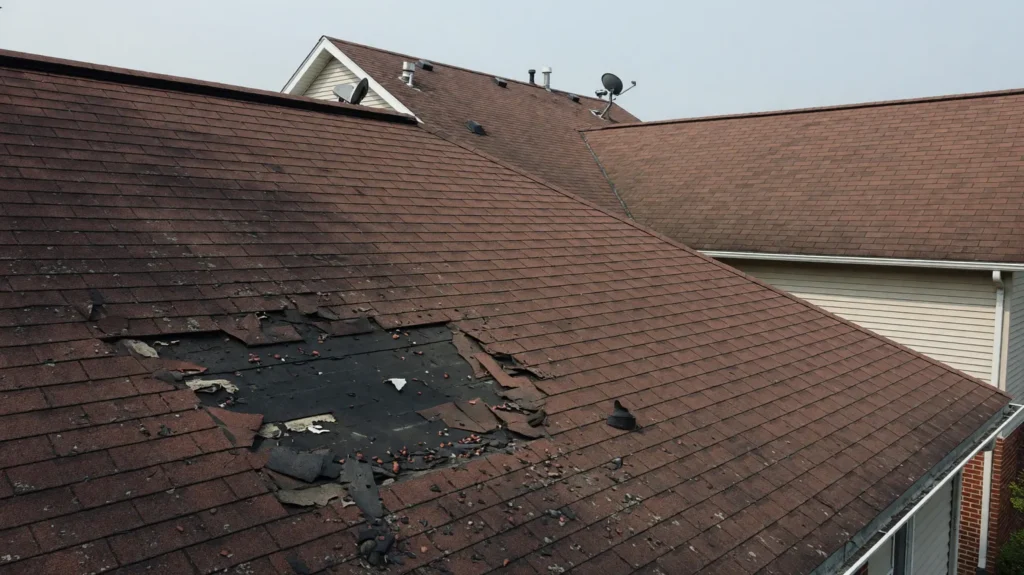
- Daylight or missing sections — Large missing shingle fields, exposed underlayment, or light coming through the attic mean you need more than a spot repair.
- Storm damage across the whole roof — Hail bruises, wind creases, or lifted shingles on most slopes often make replacement the cleaner, warrantied fix—especially when insurance is involved.
If you only see one or two damaged shingles on an otherwise young, healthy roof, repair is often enough. If several of the signs above show up together, plan on replacement.
Average Roof Lifespan by Material
Age alone does not decide everything, but it sets the baseline. A mid-life roof with a small leak is a different conversation than a 28-year asphalt roof with the same leak.
| Material | Average lifespan | Repair threshold notes |
|---|---|---|
| Asphalt shingles | 15–30 years | Repairs make sense early/mid-life; late-life damage often favors replace |
| Metal | 40–70 years | Panel or fastener repairs common; full replace less frequent |
| Tile | 50+ years | Broken tiles are often repairable if underlayment is sound |
| Slate | 75–100+ years | Specialist repairs; underlayment failure can force larger work |
Most Hahn Roofing residential work is asphalt shingle. In Iowa winters and Louisiana heat and humidity, real-world lifespan can land on the shorter side of the range if ventilation, installation quality, or storm exposure were poor.
Key Factors Contractors Use to Decide Repair vs Replacement
A good inspection checks the roof surface, attic, flashing, valleys, and penetrations—then explains the recommendation in plain language.
Roof age vs remaining life If the roof has only a few good years left, a cheap repair can become a wasted repair.
Scope of damage One slope vs the whole roof, a single penetration vs dozens of hail hits.
Decking and underlayment condition Soft or rotten sheathing, failed underlayment, or widespread moisture changes the job from “shingle work” to a system replacement.
Repair history Multiple prior patches in different areas are a red flag that the roof is nickeling-and-diming you.
Matching materials Older shingles fade and discontinue. A visible patch on the front elevation may look worse than a full reroof.
Total cost relative to a new roof Many contractors use a practical rule: if repairs approach roughly 30% of replacement cost (and the roof is older), replacement usually delivers better long-term value.
When Repair Makes Sense vs When Replacement Is Smarter
| Scenario | Repair? | Replace? | Cost impact | Long-term value |
|---|---|---|---|---|
| Minor leak at flashing / one pipe boot on a newer roof | Yes | No | Low | High — targeted fix |
| Handful of missing shingles after wind, roof otherwise sound | Yes | Maybe later | Low–moderate | Good if underlayment is intact |
| Widespread hail or wind damage across slopes | Rarely | Yes | Higher upfront | Better warranty and uniform protection |
| Old roof (near end of life) with a new leak | Short-term only | Yes | Repair seems cheap; replace costs more now | Replace usually wins over 5–10 years |
| Soft decking / sagging / repeated leaks | No | Yes | Highest | Required for a safe, dry home |
Paying for three “small” repairs in two years often costs more than doing the reroof once—with a fresh warranty.
Homeowners Insurance and Roof Decisions
Storm damage is a big part of the repair-vs-replace conversation in both Iowa (hail, wind, ice) and Louisiana (wind, severe storms, humidity-driven wear).
- Covered perils matter — Sudden hail or wind damage is often claim-eligible. Wear and tear, age, and neglect usually are not.
- ACV vs RCV — Actual Cash Value policies pay depreciated value. Replacement Cost Value policies are more likely to support a full reroof when damage qualifies. Read your declarations page.
- Documentation helps — Photos, an inspection report, and a clear scope from a roofing contractor make adjuster conversations easier.
- Do not let a patch hide a claimable loss — If storm damage is roof-wide, a small cosmetic fix can undercut the real scope. Get the inspection first.
Hahn Roofing can inspect storm damage and help you understand repair vs replacement options before you commit. Coverage always depends on your policy and the carrier’s determination.
Regional Climate Considerations
Regional climate matters. Iowa winters and Louisiana heat both change how long a repair will hold—and when replacement is the smarter call.
Iowa
Freeze-Thaw, Ice, and Hail
Freeze-thaw cycles, ice dams, and hail shorten shingle life and expose weak flashing. A repair that ignores attic ventilation or ice-prone eaves may not last.
Louisiana
Heat, UV, Humidity, and Wind
Heat, UV, humidity, and wind lift stress asphalt roofs. Granule loss and sealant failures show up sooner on sun-baked slopes. Storm seasons also make “one more patch” risky if the whole field is fatigued.
Energy Efficiency Considerations
A full replacement is also a chance to improve underlayment, ventilation, and shingle class—details that can help attic temperatures and comfort. Energy savings alone rarely justify a reroof, but they are a real bonus when replacement is already the right structural call.
Frequently Asked Questions
How do I know if my roof needs repair or replacement?
Look at age, how many areas are damaged, whether leaks keep returning, and whether the deck feels soft. Localized damage on a younger roof favors repair; widespread wear or end-of-life age favors replacement.
What is the average cost difference between roof repair and replacement?
Repairs are usually a few hundred to a few thousand dollars. Full replacement is a much larger project. A common rule of thumb: if repair costs near 30% of replacement—and the roof is older—replacement often makes more sense.
Does homeowners insurance cover roof replacement?
Sometimes, when a covered peril (like hail or wind) causes the damage and your policy terms support it. Age-related failure is typically not covered. ACV vs RCV changes how much you receive.
Can I replace only part of my roof?
Partial replacement is possible, but matching color and weathering is hard, and different-aged slopes can create future leak lines. Many homeowners end up replacing the rest sooner than expected. Ask whether a partial job will look right and still carry a solid warranty.
How does roof age affect the repair vs replace decision?
On a newer roof, repair is often the right first step. Near the end of the material’s lifespan, the same damage usually means replacement so you are not paying twice.
Get a Clear Answer for Your Roof
You do not have to guess when to repair vs replace a roof. The right choice depends on lifespan, damage scope, decking condition, repair history, and—after storms—insurance realities.
Serving homeowners across Iowa and Louisiana since 1979, Hahn Roofing provides honest estimates for roof repair and roof replacement.